The Palletizing Equipment Market Transformation
The palletizing equipment market is undergoing a significant transformation, driven by e-commerce growth, labor shortages, and the need for resilient operations. In 2026, three major trends are set to define the next wave of automation adoption:
1. Collaborative and Mobile Palletizers Gaining Traction
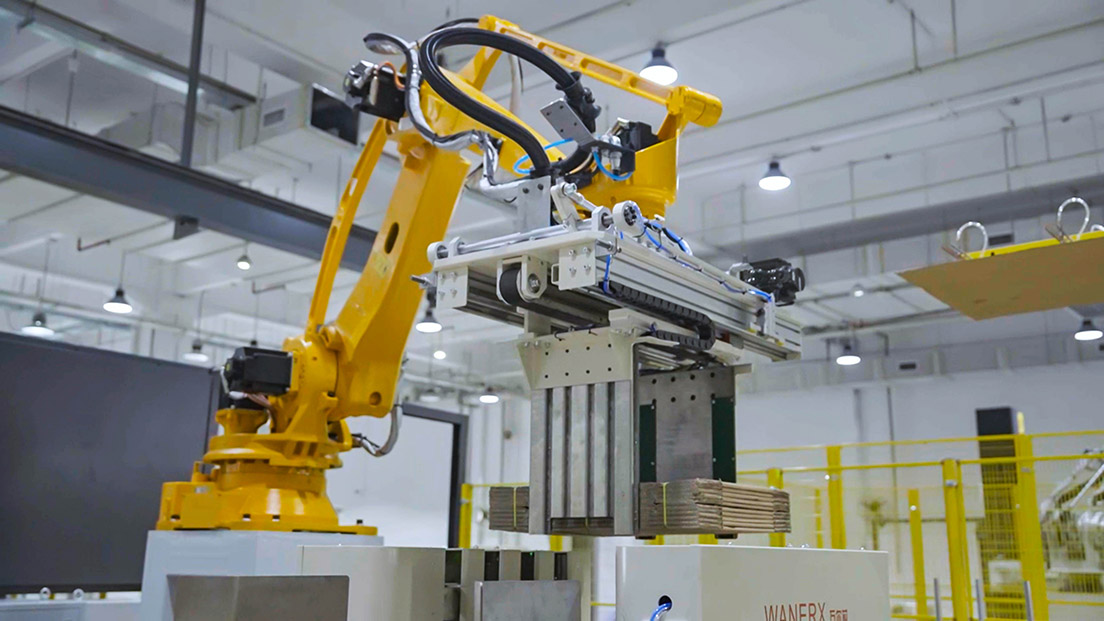
Fixed heavy-duty systems are no longer the only option. Lightweight collaborative robots (cobots) and movable palletizers are increasingly deployed for seasonal peaks, multi-line sharing, and space-constrained facilities. Their flexibility allows businesses to scale operations without major infrastructure investment.
2. Sustainability-Driven Design
Energy efficiency and reduced material waste are becoming key purchasing factors. Modern palletizers are now designed with variable speed drives, optimized motion paths, and lightweight structures to minimize carbon footprint. Additionally, the ability to handle recycled and varied packaging materials is now a standard requirement.
3. Integration with Smart Logistics Ecosystems
Stand-alone automation is giving way to connected systems. Palletizers equipped with IoT sensors and standard communication protocols (such as OPC UA and Modbus TCP) can now feed real-time data into Warehouse Management Systems (WMS) and cloud platforms, enabling predictive maintenance, throughput analytics, and remote troubleshooting.
"For companies considering automation, the focus should now be on adaptability. The winning solutions are those that can handle mixed SKUs, connect seamlessly with existing infrastructure, and support both current and future sustainability goals."
- Industry Expert from WANERX
Market Outlook
The global palletizing robot market is projected to grow steadily through the decade, with Asia-Pacific remaining the largest and fastest-growing region, according to recent industry reports.
Businesses planning to upgrade or implement palletizing systems are encouraged to evaluate solutions based on flexibility, connectivity, and total lifecycle value—not just upfront cost.