How to Choose a Case Palletizer for Carton Packaging
Choosing a case palletizer for carton packaging requires more than checking robot payload. Buyers should compare carton dimensions, case weight, throughput, pallet pattern, gripper, line layout, changeover, safety, and after-sales support. This guide shows how to evaluate a case palletizer for a carton line, what information to prepare for an RFQ, and how to compare configurations without treating one machine as a universal solution.
What Is a Case Palletizer and When Do You Need One?
A case palletizer automatically receives cartons, cases, or boxed products and arranges them on pallets according to a programmed pattern. It may pick individual cases, pick several cases together, form layers, and connect with conveyors, pallet dispensing, wrapping, and finished-pallet discharge.
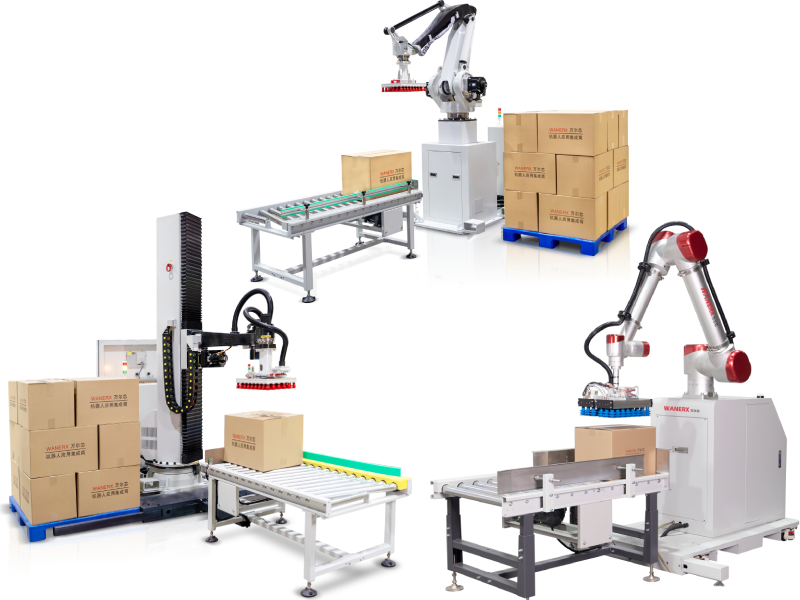
Consider automatic carton palletizing when manual handling limits output, creates unstable layers, damages cartons, increases lifting risk, or makes additional SKUs and shifts difficult to manage. It is also a practical next step when filling, sealing, labeling, and conveying are already automated but pallet building remains manual. Review the cardboard palletizing robots page as an equipment reference, then confirm the configuration with carton samples, production data, pallet details, and the available footprint.
7 Factors to Compare Before Choosing a Case Palletizer
1. Carton Dimensions, Weight, and Stability
Provide length, width, height, and minimum, average, and maximum case weight for every SKU. Describe board type, coating, film, labels, dust, moisture, seams, and whether cartons may flex, slide, or be compressed. A carton that is easy to handle at one size may behave differently when its filling ratio or board strength changes. Send the complete SKU range rather than only the easiest carton.
2. Throughput and Cycle Rate
State current and target cases per minute or hour. Explain whether infeed is continuous, intermittent, or uneven, and whether one or several lines will feed the machine. Completed pallet rate depends on spacing, accumulation, layer forming, pallet changes, and discharge—not only robot pick speed. Ask the supplier to explain buffering, priority logic, and recovery after a short stoppage. Do not include an unsupported speed claim in the RFQ.
3. Pallet Pattern and Load Stability
Specify cases per layer, number of layers, pallet size, maximum height, allowable overhang, interlocking or aligned pattern, and any slip sheets. State whether labels must face a specific direction. The load must remain stable during wrapping, forklift handling, storage, and transport. For several patterns or carton sizes, confirm how recipes are created, stored, selected, and tested. Compare relevant robot palletizing systems against the required finished-load stability.
4. Gripper Selection
Vacuum tooling may suit cartons with an appropriate surface; clamp-style or combination tooling may provide better control for flexible, dusty, irregular, or heavier cases. A multi-case gripper can improve efficiency only when spacing, weight distribution, and the pallet pattern support group picking. Provide samples, photos, or videos and request testing on the most difficult SKU. For mixed products, ask whether the system changes tooling, adjusts settings, or uses stored recipes.
5. Layout and Line Integration
Show the case packer or sealer, inspection, labeling, conveyors, accumulation, pallet magazine, pallet positioning, wrapping, warehouse transfer, ceiling height, walkways, forklift routes, and safety clearances. Confirm PLC, HMI, SCADA, WMS, or MES interfaces and the signals for product-ready, pallet-ready, fault, reset, recipe selection, and completed-pallet status. For multi-line feeding, define priority, buffer capacity, and what happens when one line stops. See packaging production line integration for the broader end-of-line context.
6. Changeover and Future Expansion
List SKU count, carton-size changes, changeover frequency, and expected future production. Low-mix lines may prioritize repeatability and throughput; high-mix lines may need recipe management, automatic adjustments, flexible tooling, or safer manual access. Ask whether changing pallet dimensions, patterns, orientation, and infeed settings requires tools, measurements, software recipes, or supplier support. A movable palletizer for flexible production can be considered for selected cross-line or high-mix, low-volume applications, not as a default solution.
7. Safety, Maintenance, and Support
Review guarding, emergency stops, collision protection, access control, light curtains, scanners, and the complete work-cell risk assessment. Ask for preventive-maintenance intervals, critical spares, fault logs, remote diagnostics, software backups, operator training, installation, commissioning, and performance testing. Define the service response expected at the installation site and the responsibility boundary for the robot, gripper, conveyors, controls, and integration. Relevant packaging automation services and support should still be matched to the specific carton project.
Which Configuration Fits Your Carton Line?
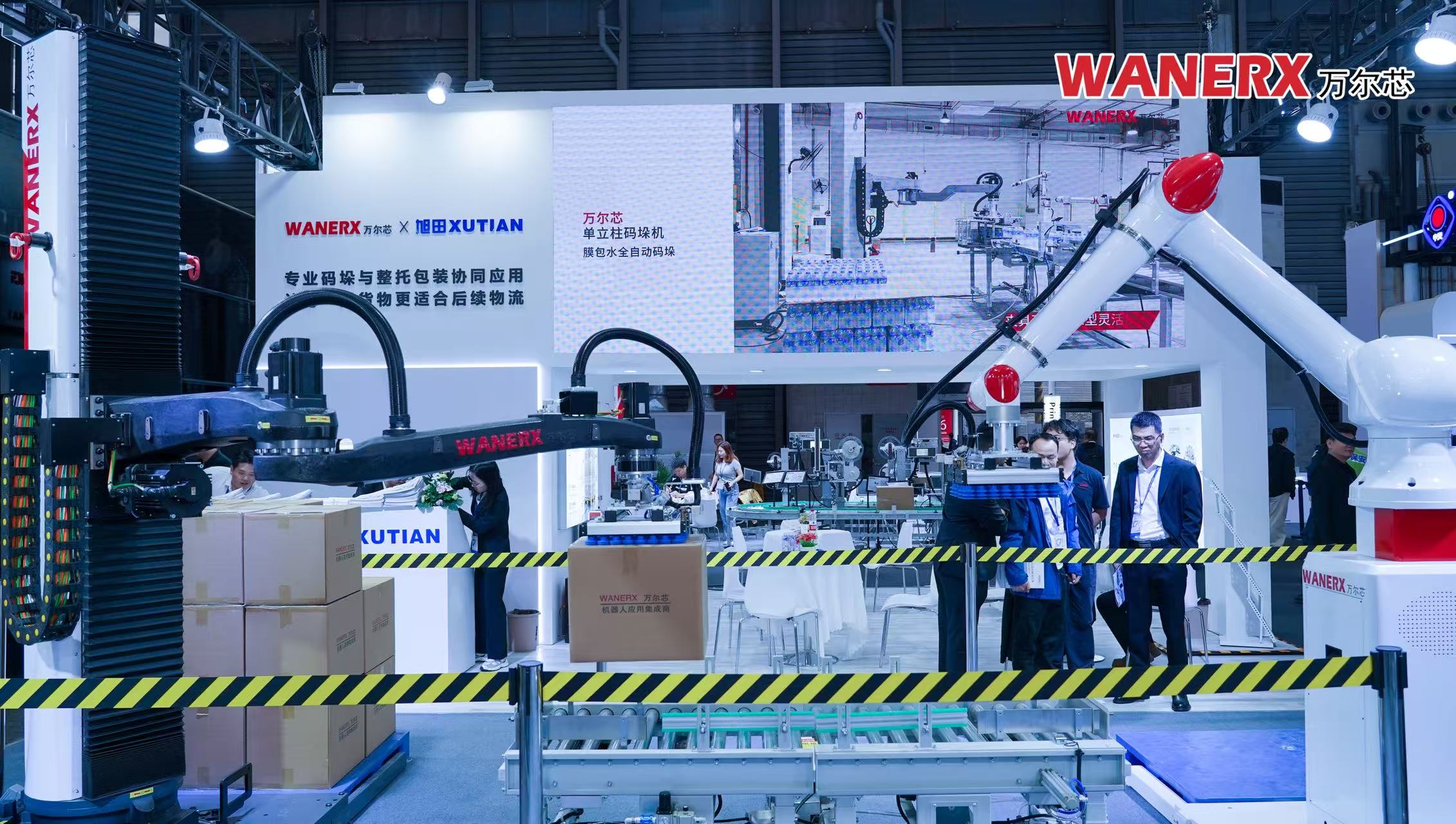
A standard robotic palletizer is a candidate when carton sizes, pallet patterns, reach, and line rates are defined. A collaborative palletizer may suit restricted space or operator-near work, but payload, speed, tooling, reach, and safety must be assessed first. An automatic flat cardboard palletizing system addresses flat cardboard or paper bundles, not automatically filled cartons. A heavy-duty column palletizer is relevant only when case weight, reach, or special loads justify its structure and payload.
The correct choice is the configuration that matches the carton range, production rate, footprint, changeover, controls, and finished-pallet handling. Compare suppliers using the same assumptions and request a layout rather than relying on a generic machine description.
Case Palletizer RFQ Checklist
Send these details with drawings, photos, samples, or videos when possible:
|
RFQ information |
Example submission |
|
Product and carton data |
Carton type, dimensions, surface, and SKU range |
|
Case weight |
Minimum, average, and maximum |
|
Throughput |
Current rate and future target |
|
Pallet requirement |
Pallet size, layer pattern, height, and overhang |
|
Line scope |
Single or multiple lines; upstream and downstream equipment |
|
Changeover |
SKU count and carton-size change frequency |
|
Site information |
Footprint, height, utilities, destination market |
|
Controls |
PLC, SCADA, WMS, MES, or other interfaces |
For an initial review, request a case palletizing solution and include carton dimensions, case weight, target throughput, pallet layout, and connected equipment. Complete information helps the engineering team assess the gripper, robot configuration, buffer, and integration scope.
FAQs About Case Palletizers
What information is needed for a quotation?
Provide carton dimensions, case-weight range, current and target throughput, pallet size and pattern, SKU count, layout, connected equipment, controls, installation location, and service expectations.
Can one case palletizer handle multiple carton SKUs?
It may be possible when reach, payload, gripper, spacing, recipes, and pallet patterns are compatible. Test the most difficult SKU and define the changeover method before approval.
Can it integrate with an existing packaging line?
Yes, when product flow, space, controls, safety, pallet handling, and throughput are compatible. The supplier should review the existing layout and define interfaces before confirming scope.
Conclusion: Choose Around Your Carton Line
The right case palletizer is not automatically the fastest robot or the highest-payload machine. Compare carton dimensions, weight, stability, throughput, pallet pattern, gripper, layout, changeover, safety, maintenance, and support as one purchasing decision. Before requesting a proposal, prepare the RFQ data and ask what the quotation includes: robot, gripper, conveyors, pallet handling, guarding, controls, commissioning, training, and spare parts. Then use the case palletizing solution request to give the engineering team a practical basis for recommending a workable configuration.